
Planning a road trip in New Zealand gives you the freedom to explore beautiful coastlines, peaceful towns, mountain roads, and popular tourist destinations at your own pace. However, choosing the right rental car can be challenging when you are trying to manage your travel budget.
The key is to compare more than the daily price. Insurance conditions, fuel expenses, security deposits, vehicle size, and pickup arrangements can all affect what you ultimately pay. A little preparation can help you avoid unnecessary costs and choose a vehicle that suits your journey.
Whether you are visiting for a family holiday, travelling with friends, or planning a scenic drive across the country, this guide explains how to find book a car for rent in New Zealand options and make a well-informed decision with Kiwi Car Rental.
New Zealand has a diverse landscape, with busy cities, coastal communities, rural destinations, and scenic driving routes. Public transport can be convenient in major urban areas, but reaching smaller towns and certain attractions may require additional planning.
Hiring a car gives you greater flexibility over your itinerary. You can stop at viewpoints, visit local attractions, and adjust your plans without depending entirely on public transport schedules.
A rental vehicle can be particularly helpful when your itinerary includes several destinations. Instead of arranging separate transfers, you can organise your journey around your preferred stops.
For example, a family visiting Auckland might spend the first two days exploring the city before driving to nearby coastal destinations. Hiring a car only when it becomes necessary could be more economical than keeping a vehicle throughout the entire stay.
Before booking, consider how often you will drive, where you intend to go, and whether parking will be available at your accommodation.
Families and groups often need additional luggage space, convenient pickup arrangements, and enough room for everyone to travel comfortably.
A suitable rental car can make transporting suitcases, shopping, and travel equipment easier. However, vehicle capacity should always be checked before booking. The number of passengers a car can seat does not necessarily indicate how much luggage it can carry.
Choosing a vehicle that matches your actual requirements can help you balance comfort and affordability.
Finding an affordable vehicle begins with understanding how rental prices work. Rates can change according to travel dates, vehicle availability, rental duration, location, and seasonal demand.
The lowest advertised price is not always the best overall deal.
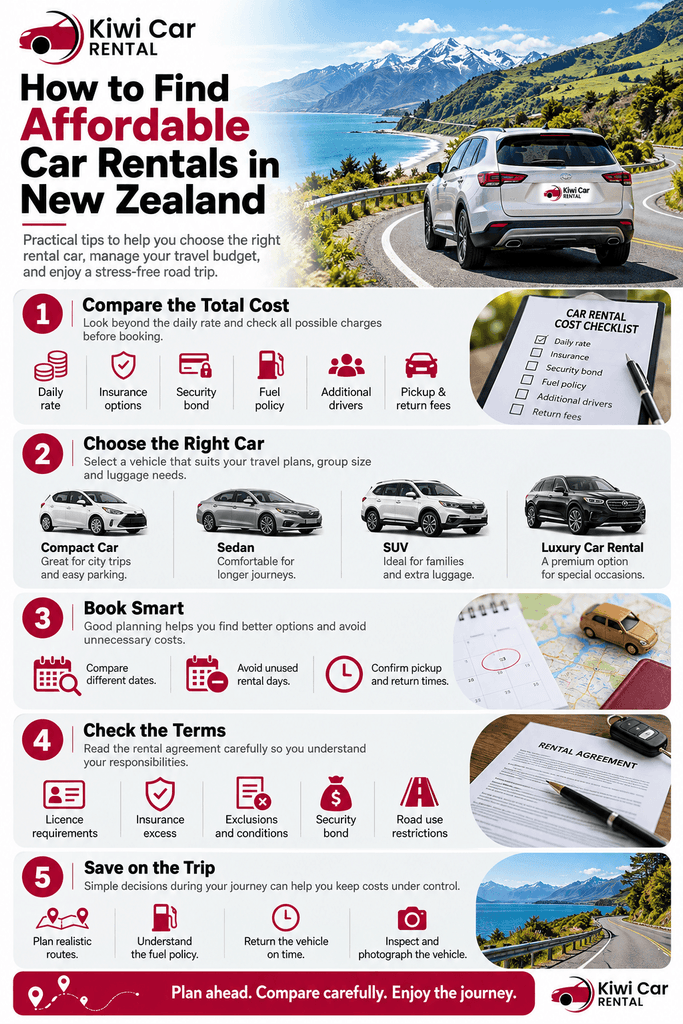
When researching a car rental, look beyond the daily rate and identify any additional expenses that may apply.
Use the following checklist when reviewing a quotation:
Not every provider applies the same fees. Read the quotation and rental agreement carefully so that you understand which charges are included and which may be added later.
A larger vehicle or premium package may provide useful features, but it may not be necessary for every journey.
Before choosing a vehicle, ask yourself:
Answering these questions helps you focus on practical value rather than paying for features you are unlikely to use.
The right car depends on your itinerary, passenger numbers, luggage, and driving preferences. Selecting an appropriate vehicle can improve comfort without unnecessarily increasing your travel budget.
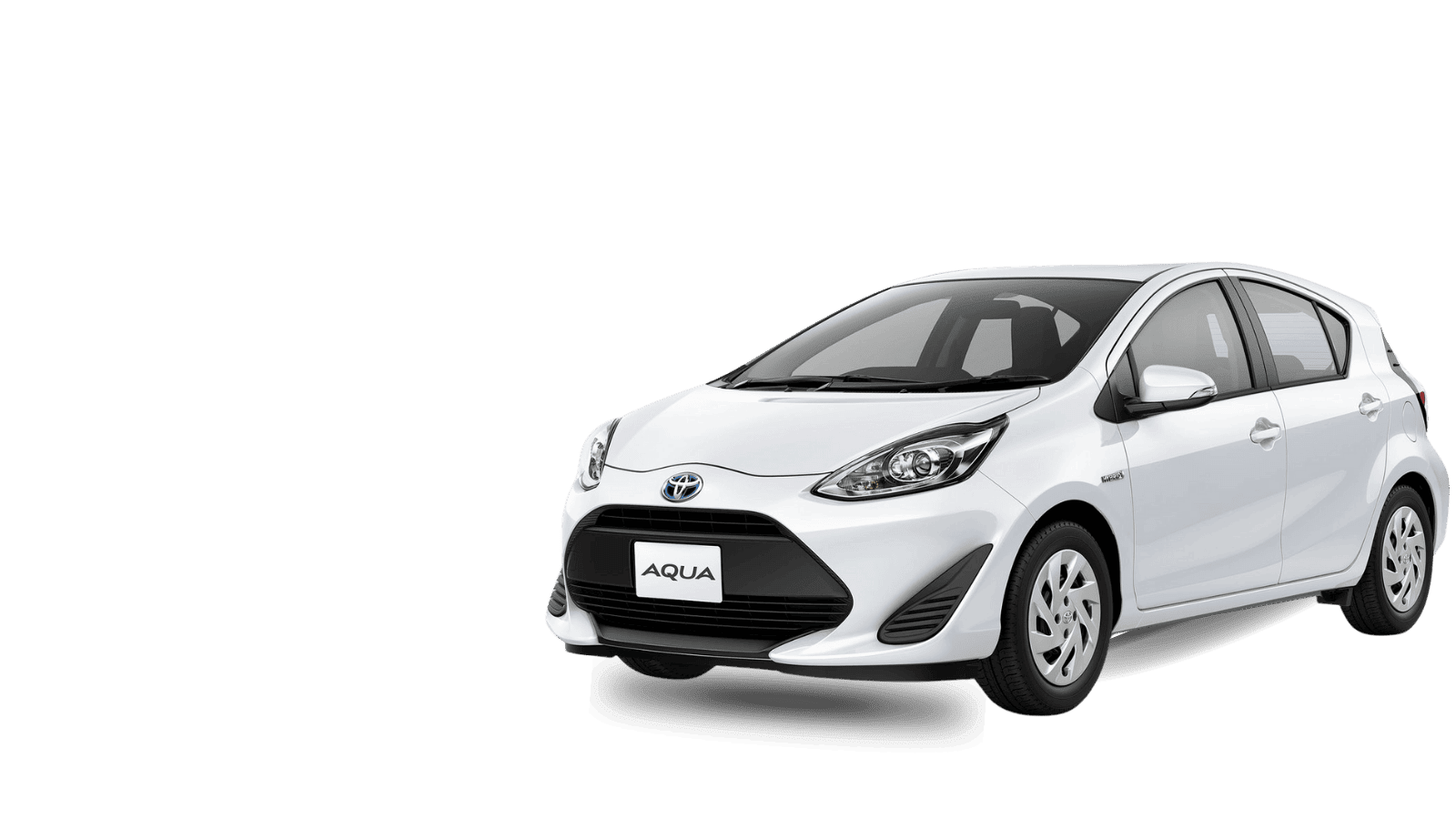
Compact cars can be a sensible option for solo travellers and couples who do not need much luggage space.
They may be easier to park in busy urban areas and can be economical to operate, depending on the model and driving conditions.
Consider a compact vehicle if you plan to spend most of your time in Auckland, Wellington, or Christchurch and need transport for occasional day trips.
However, check the luggage capacity before confirming your booking. A vehicle that seats four people may not comfortably accommodate four passengers with large suitcases.
A sedan may suit travellers who want additional cabin space for longer journeys. Depending on the model, it may offer a comfortable seating position and enough room for everyday luggage.
If your itinerary includes several hours of driving, compare seating comfort, boot capacity, fuel requirements, and available safety features.
Do not assume that a more expensive vehicle is automatically better. Focus on the features that will make your particular journey more comfortable.
An SUV may be suitable for families or groups carrying outdoor equipment and larger bags. Some models provide greater cargo capacity and a higher seating position.
However, an SUV is not essential for every New Zealand road trip. Many established tourist routes can be travelled in a standard passenger car, depending on the road conditions and rental agreement.
Choose an SUV when its additional space or features provide genuine value for your trip.
Luxury car rental may be appropriate for business travel, anniversaries, honeymoons, or other special occasions where comfort and presentation matter.
Premium vehicles may include upgraded interiors, additional technology, or enhanced performance. They can also involve higher rental rates, deposits, insurance excesses, or other requirements.
Before choosing a premium model, check the applicable terms and compare the additional cost with the benefits you expect to receive.
For travellers prioritising affordability, a standard vehicle may be the more practical option. For a special occasion, the additional expense may be worthwhile if the vehicle is an important part of the experience.
Booking at the right time can give you more opportunities to compare available vehicles and rental conditions. However, no booking period guarantees the lowest price.
Rental demand can increase during summer holidays, school breaks, and major events. If your dates are fixed, researching your options early gives you more time to evaluate suitable vehicles.
If your itinerary is flexible, compare different dates to see whether the available rates and vehicle categories change.
Consider these practical steps:
For example, a traveller arriving on Monday evening may not need a car until Wednesday morning. Comparing both pickup dates could reveal an opportunity to reduce the overall rental expense.
Airport pickup can be convenient after a long flight, but it is worth comparing the available collection arrangements.
Check the exact location, operating hours, transfer requirements, and any additional fees. If you plan to return the car somewhere different, confirm whether a one-way charge or other restriction applies.
Also, allow enough time for vehicle collection, return inspections, and travel to the airport.
International visitors should confirm that they meet New Zealand’s driving requirements and the rental provider’s conditions before making a reservation. rent car in new zealand
You will need a valid driving licence accepted for the vehicle category you intend to hire. Depending on your licence and the applicable rules, an approved English translation or an international driving permit may be necessary.
Check the latest information through the New Zealand Transport Agency and confirm the documents accepted by Kiwi Car Rental before departure.
You should also check any age requirements, minimum driving experience conditions, and payment-card requirements that apply to your booking.
New Zealand roads can differ considerably from those in your home country. Some routes include narrow roads, sharp bends, steep gradients, and changing weather conditions.
Remember that vehicles drive on the left-hand side of the road in New Zealand.
Plan realistic driving times and take regular breaks. If you arrive after a long international flight, consider resting before beginning a lengthy journey.
Do not assume that every rental vehicle can be driven on every road or track. Certain roads, unsealed surfaces, or remote routes may be restricted by the rental agreement.
If your itinerary includes remote destinations, check the road conditions and confirm that your intended route is permitted.
These checks help you select a suitable vehicle and understand your responsibilities before setting off.
Price matters, but a rental provider should also offer clear information about its policies and the responsibilities attached to the booking.
Before confirming your reservation, review the terms covering:
Ask questions if any condition is unclear. It is better to resolve uncertainty before collecting the vehicle than to discover a restriction during your trip.
Customer reviews can provide useful insight into communication, vehicle collection, cleanliness, and the return process.
Look for detailed comments that describe specific experiences. Repeated themes across multiple reviews may be more informative than a single very positive or negative comment.
You should also compare reviews with the provider’s published policies. Reviews can help you evaluate service experiences, but they do not replace reading the rental agreement.
Kiwi Car Rental is an option to consider when comparing rental vehicles and arrangements for a New Zealand trip.
Before making a decision, review the available vehicle options, the applicable price, pickup and return arrangements, and the terms associated with your proposed booking.
Pay particular attention to insurance choices, excess amounts, security bonds, and any additional charges that may apply. The most suitable arrangement is one that meets your travel requirements and provides clear information about the total cost.
You can also review Kiwi Car Rental’s published terms and conditions to understand the responsibilities associated with hiring a vehicle.
Small planning decisions can help reduce unnecessary costs without making your journey inconvenient.
If you are staying in a city before beginning a road trip, consider whether you can use public transport or walk during the first part of your visit.
Collecting the vehicle only when your itinerary requires it may reduce the number of rental days.
A realistic route helps you estimate fuel costs, travel times, parking expenses, and accommodation requirements.
Before leaving, check the distance between destinations, road conditions, and available refuelling points. Remember that winding roads and changing weather can make journeys take longer than expected.
Avoid scheduling too many long drives in one day. A manageable itinerary can reduce fatigue and help you enjoy the journey.
Check the fuel policy before collecting the vehicle. If the agreement requires you to return the car with a particular fuel level, plan to refuel before returning it.
Keep receipts if required and confirm the expected fuel level during the return process.
Optional equipment may be useful, particularly child restraints for families. However, avoid adding features that you do not need.
If travelling with children, make sure the restraint meets the applicable safety requirements and is suitable for the child’s age, size, and needs.
Returning a vehicle late can lead to additional charges, depending on the agreement.
Allow time for traffic, refuelling, locating the return point, and completing the inspection. If your plans change, contact the provider promptly rather than assuming that the return time can be extended without cost.
A low advertised rate may exclude charges that affect the final amount.
What to do instead: Compare the full rental price and understand the conditions attached to each option.
Insurance arrangements can include exclusions and specific reporting requirements. The amount you may have to pay following an incident depends on the applicable policy and circumstances.
What to do instead: Read the policy carefully and ask about excess, exclusions, and the claims process before accepting the booking.
A vehicle may have enough seats but insufficient space for everyone’s bags.
What to do instead: Check the stated luggage capacity and consider the number and size of your suitcases.
A security bond may affect the funds available on your payment card during the rental period.
What to do instead: Confirm the required amount, accepted payment methods, and release conditions before travelling.
Long distances, winding roads, weather changes, and unfamiliar driving rules can make journeys more demanding than expected.
What to do instead: Plan realistic driving days, check road conditions, and stop somewhere safe when you need a break.
Use this checklist to review your arrangements before payment or vehicle collection.
These simple steps help you make a more informed decision and reduce the likelihood of avoidable problems during your trip.
Finding an affordable rental car in New Zealand requires a little research, realistic travel planning, and careful comparison. Focus on the total rental price, select a vehicle that suits your itinerary, and understand the insurance and payment conditions before confirming your reservation.
Whether you are planning a short city visit or a longer road trip, the right vehicle can make travelling more convenient while helping you manage your budget.
If you plan to book a car for rent in New Zealand, consider Kiwi Car Rental when comparing your options. Review the available vehicles and rental terms, then choose the arrangement that best suits your travel dates, passenger requirements, and budget.
Compare several suitable vehicles for the same dates, rental period, and pickup location. Review the total cost, including applicable insurance charges, excess, deposits, additional drivers, and return fees. If your schedule is flexible, compare different travel dates and avoid hiring a car on days when you do not need one. Read the rental conditions carefully before choosing the option that offers the best overall value.
Booking in advance gives you more time to compare vehicles, review rental agreements, and check availability, especially during busy travel periods. However, early booking does not guarantee the lowest price. Compare available options and check the cancellation or amendment policy before confirming your reservation.
Requirements depend on your licence, the applicable driving rules, and the rental provider’s conditions. You will generally need a valid accepted driving licence, and some international visitors may require an English translation or an international driving permit. Additional identification, payment-card, or age requirements may apply. Confirm the current requirements with the relevant authorities and your rental provider before travelling.
Start with the number of passengers, luggage capacity, driving distance, and type of roads on your itinerary. A compact car may be suitable for city trips, while a larger car or SUV may be more comfortable for families carrying substantial luggage. Luxury vehicles may suit special occasions but can involve higher costs. Check the vehicle specifications and rental restrictions before confirming.
Kiwi Car Rental is one provider you can consider when researching vehicles for your trip. Evaluate its available options, quoted price, collection arrangements, and rental conditions against your needs. Review the insurance terms, excess, security bond, and possible additional charges before booking. Your decision should be based on the complete rental arrangement rather than the advertised daily rate alone.