
Planning to rent a car in New Zealand? Before you hit the road, understanding local driving laws is not just helpful—it’s essential. Many travellers assume driving rules are similar worldwide, but New Zealand has unique regulations that can catch visitors off guard.
At Kiwi Car Rental, we often see travellers excited about scenic drives but unaware of critical legal requirements. From driving on the left side of the road to strict speed enforcement, even small mistakes can lead to fines or safety risks. This guide breaks down everything you need to know to drive confidently and legally.
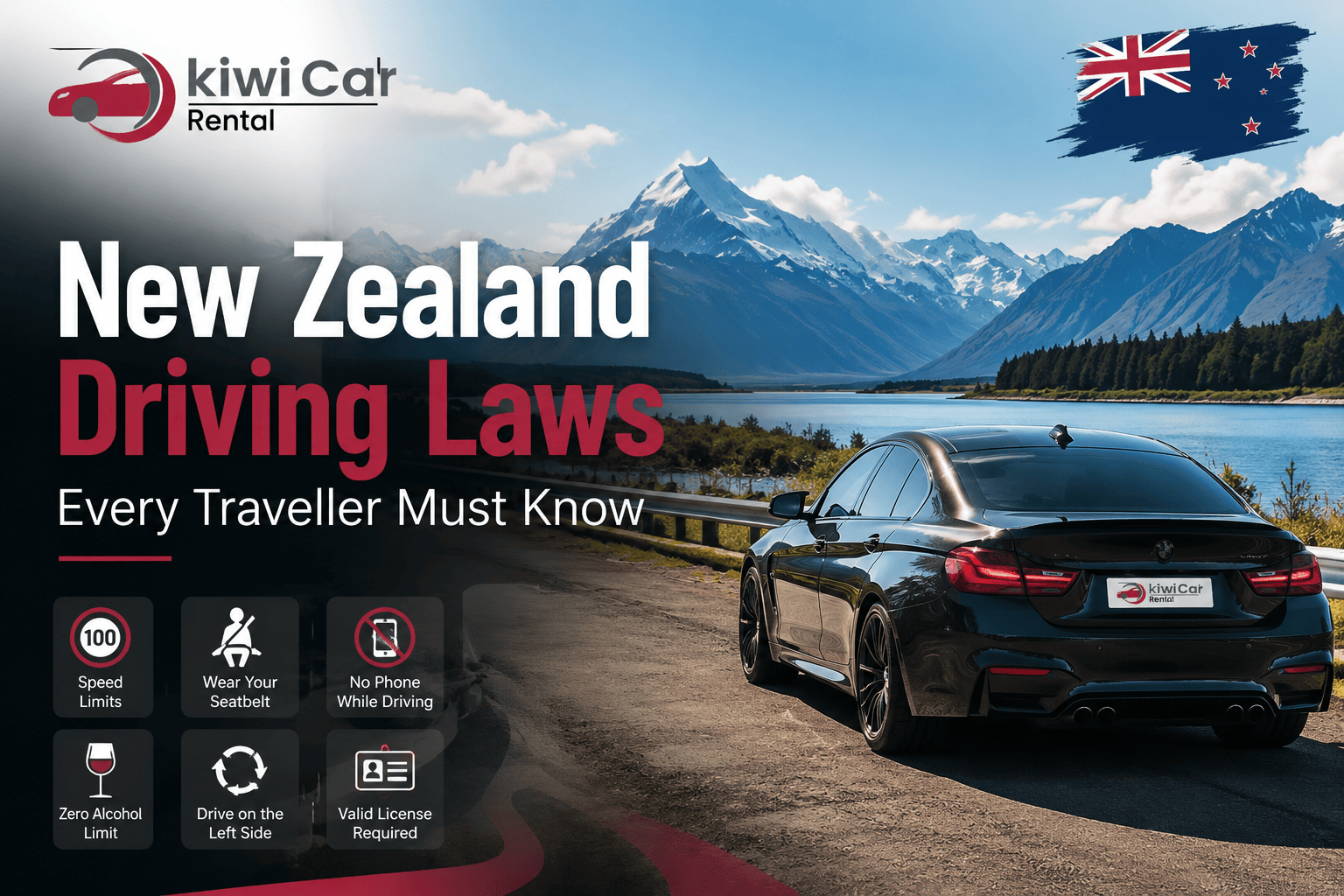
Left side driving tops the list for road rules in New Zealand. Though the network prioritizes safety, staying alert matters a lot more when you are from overseas. Following this rule isn’t just a habit, it shapes how everyone moves along the routes.
Other essential rules include:
Most folks find roundabouts tricky, especially when they’re new to country driving. Knowing what to do there helps avoid crashes along with penalties. A short time learning the basics makes a difference later on down the road.
Before choosing a rental car service in New Zealand, make sure you meet all overseas driver requirements.
To legally drive, you must:
At Kiwi Car Rental, verifying these documents is part of the booking process, ensuring travellers are road-ready before departure.
The New Zealand driving laws for tourists in 2026 focus heavily on safety and responsible driving. Authorities strictly enforce regulations, especially for visitors unfamiliar with local conditions.
Key legal points include:
Fatigue hits many travelers, seen clearly when you watch people on trips. Because sightseeing often means hours behind the wheel, rest stops matter. When roads stretch on, pauses help – built-in moments to step out make a difference.
Choosing the right car hire service can significantly impact your experience. Not all services offer the same level of support, vehicle quality, or transparency.
When you rent a car in New Zealand, consider:
With Kiwi Car Rental, travellers benefit from well-maintained vehicles and clear rental terms, reducing confusion and stress.
Out on unfamiliar roads, seasoned drivers still face hurdles. A different place means fresh rules to learn fast. Every turn might surprise you when signs look strange. Confidence behind the wheel can fade quickly abroad. Roads talk in ways you’ve never heard before.
At first, changing lanes might seem odd. Most people naturally lean toward the right, particularly where traffic is light.
Where two vehicles meet, one must yield on narrow country lanes. Curves limit sight distance, so drivers slow well ahead of bends.
Not everything will look familiar at first glance. Spending a moment to understand it can prevent errors down the line.
Distances in New Zealand often trick the eye. A journey that seems quick on paper might stretch into hours, thanks to rugged land between points.
From experience, travellers who prepare for these challenges have a much smoother journey.
Here are practical, experience-based tips to help you stay safe:
At Kiwi Car Rental, we often recommend planning routes in advance to avoid unnecessary stress during travel.
Understanding common mistakes can help you avoid them:
Thinking things work just because they did back home causes mistakes.
Scenic routes often stretch travel time because of frequent turns along with pauses. Sometimes roads that offer views add minutes unexpectedly.
Some scenarios need more than just the minimum protection.
Long drives without breaks increase accident risk significantly.
Later problems might pop up if the vehicle isn’t checked first. Driving without a look-over could spark arguments down the road.
Starting smart means picking someone trustworthy – Kiwi Car Rental helps dodge common problems. Getting ready the right way makes a real difference.
If this is your first time driving in New Zealand, here are expert insights:
Experienced travellers who’ve been there agree. After a little time getting used to it, steering through New Zealand turns into a highlight. The roads start feeling right, almost natural, once the initial surprise fades away.
A couple visiting New Zealand decided to rent a car in New Zealand for a South Island trip. Initially, they struggled with left-side driving and underestimated travel time.
Midway through, things started clicking – small changes made a big difference. Shifting the daily routine, stepping away often, learning how signs worked on highways brought smoother days. Confidence grew slowly, then all at once by journey’s close. Freedom to go where they wanted began feeling natural.
This highlights a key point—preparation makes all the difference.
Your driving experience depends not just on your skills but also on your rental provider. A reliable rental car service in New Zealand ensures:
Kiwi Car Rental focuses on making the process smooth for travellers, from booking to drop-off. This support can be especially valuable for first-time visitors.
Start your drive across New Zealand right by respecting its roads like locals do – safety shapes every turn. Yet without knowing local traffic laws, even scenic routes become risky. Visitors must check licensing rules from their home country before turning the key. Rules change often, so staying informed keeps surprises off the map.
When you rent a car in New Zealand, preparation is your biggest advantage. From choosing the right vehicle to understanding local laws, every step contributes to a better experience.
With the right approach and a trusted provider like Kiwi Car Rental, you can enjoy a safe, stress-free, and memorable road trip across one of the world’s most beautiful destinations.
Yes, tourists can drive with a valid licence and required translation or international driving permit documentation.
Drivers must always drive on the left side, which may require adjustment for international visitors.
Basic insurance is usually included, but additional coverage is recommended for better protection during travel.
Speed limits are generally 50 km/h in cities and 100 km/h on highways unless stated otherwise.
An international permit is required if your licence is not in English or easily understood locally.